1.MS Cabins: the workhorse
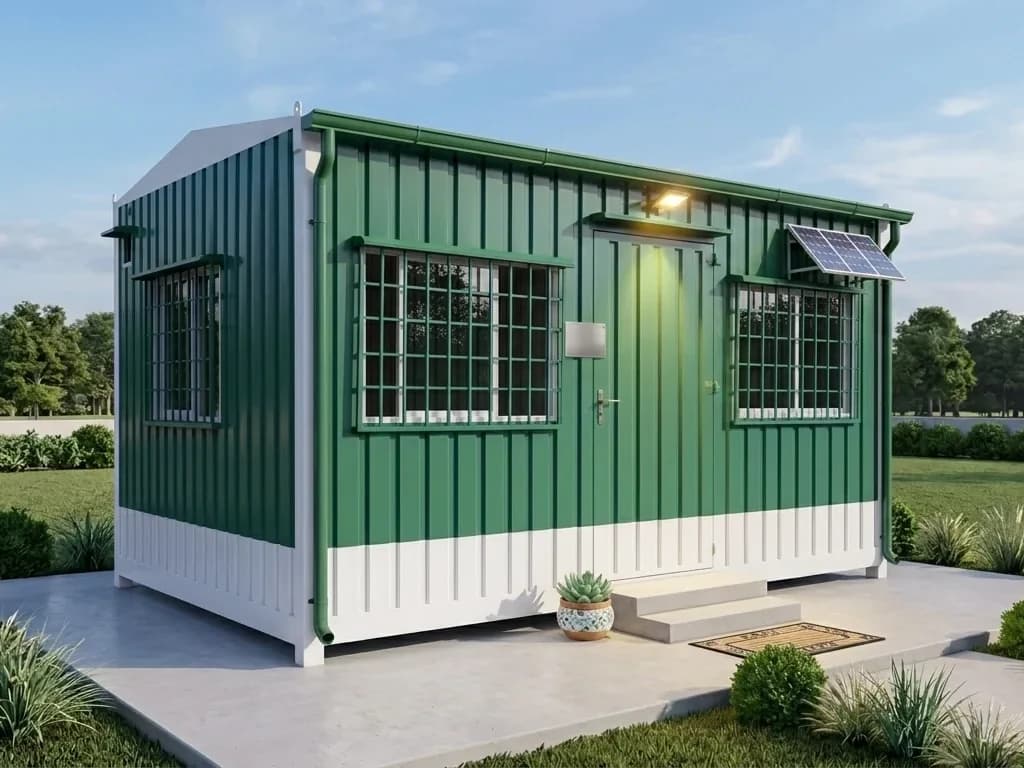
An MS (mild steel) cabin is fabricated the traditional way. A structural steel frame — typically IS 2062 Grade A, with a channel chassis and square-pipe posts — gets clad in corrugated or plain MS sheet, insulated in the cavity with mineral wool or a similar filler, and lined on the inside with cement board, ply or metal.
It is the heaviest and toughest of the three. Nothing on a construction site meaningfully damages a well-built MS cabin. Scaffolding leaning against it, a stray reversing tipper, vibration from a nearby crusher, workers dragging equipment past the wall every day — an MS cabin absorbs that and keeps going. Design life on a properly painted and maintained unit runs to 20–25 years, and if a panel does get dented, any local fabricator can cut it out and weld a new sheet in.
Where it lets you down: heat. Mineral wool in a cavity is decent insulation, but the steel skin itself is a superb conductor, and every stud and frame member is a thermal bridge carrying outdoor heat straight through the wall. In a Bengaluru winter you will not notice. In a Nagpur or Ahmedabad summer, an MS cabin without serious insulation upgrades becomes an oven by 2 pm, and you will pay for that in air-conditioning every month it stands.
It is also heavy, which means a crane or hydra to lift it, and it makes noise — rain on an MS roof is loud enough to interrupt a phone call.
MS cabins suit
- Site offices and stores on active construction and infrastructure projects
- Security cabins, weighbridge cabins and guard posts in industrial plants
- Anywhere the unit stays in one place for years and durability matters more than comfort
- Buyers who want the lowest entry price and are willing to trade thermal performance for it