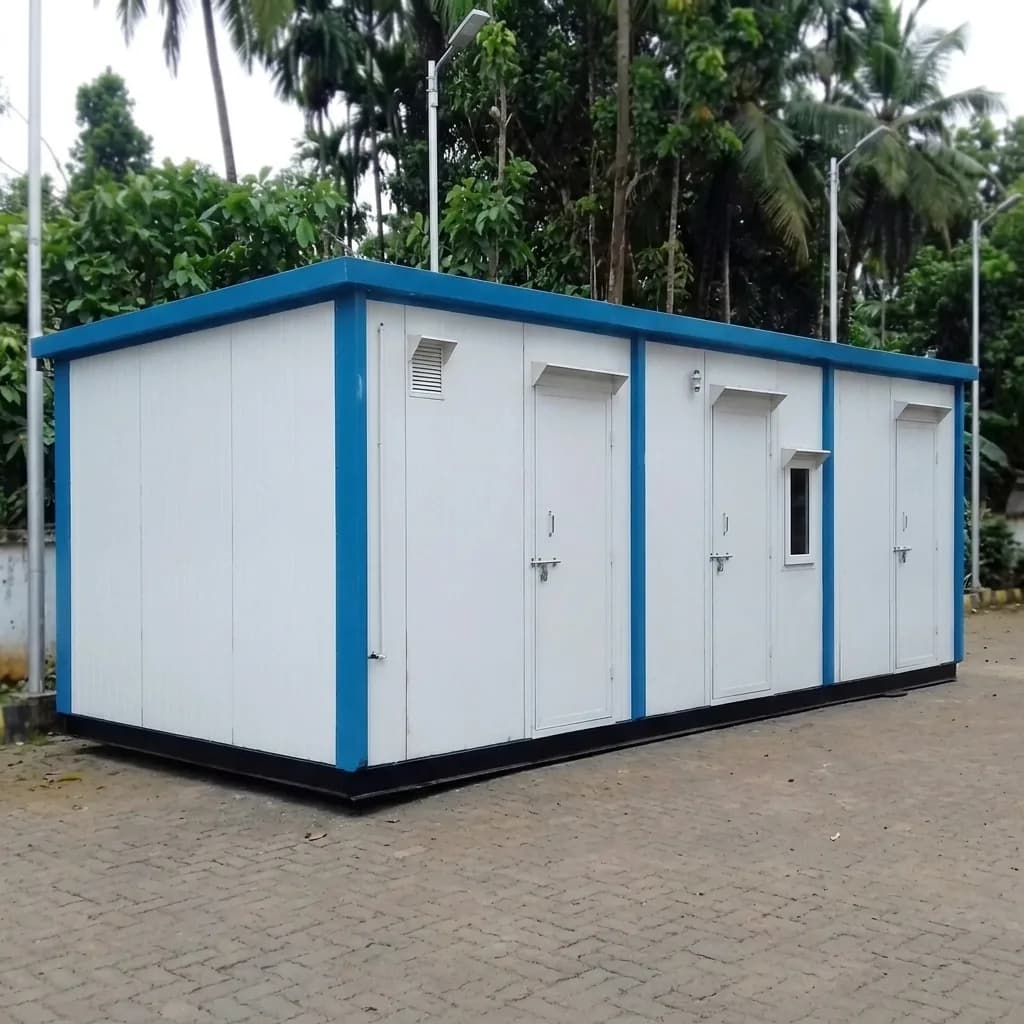
PUF Panel Cabins
20 ft PUF Panel Cabin
20 × 8 × 8.5 ft
- Site office & welfare unit
- Labour welfare cabin
₹3,12,700 grand total
incl. GST
Request a quotation through your cart. No online payment or stock reservation.
 Porta CabinSystems
GSTIN: 29BHNPA6577M1ZK
Insulated Sandwich-Panel Construction
The Insulation That Makes a Cabin Livable in India
Two cabins can look identical from the road — and be 10 degrees apart inside at 3 PM in May. The difference is the panel. Porta Cabin Systems builds PUF panel cabins around rigid polyurethane foam sandwich panels: the highest-performing insulation commonly used in India, the same material trusted for cold storage. The result is a cabin that stays markedly cooler in summer, warmer on winter nights, quieter always — and costs a fraction to air-condition.
Every product we make — site offices, security cabins, accommodation units, farmhouses, even cold rooms — can be built on PUF panels in 50 to 100 mm thicknesses, matched to your climate and use.
The technology
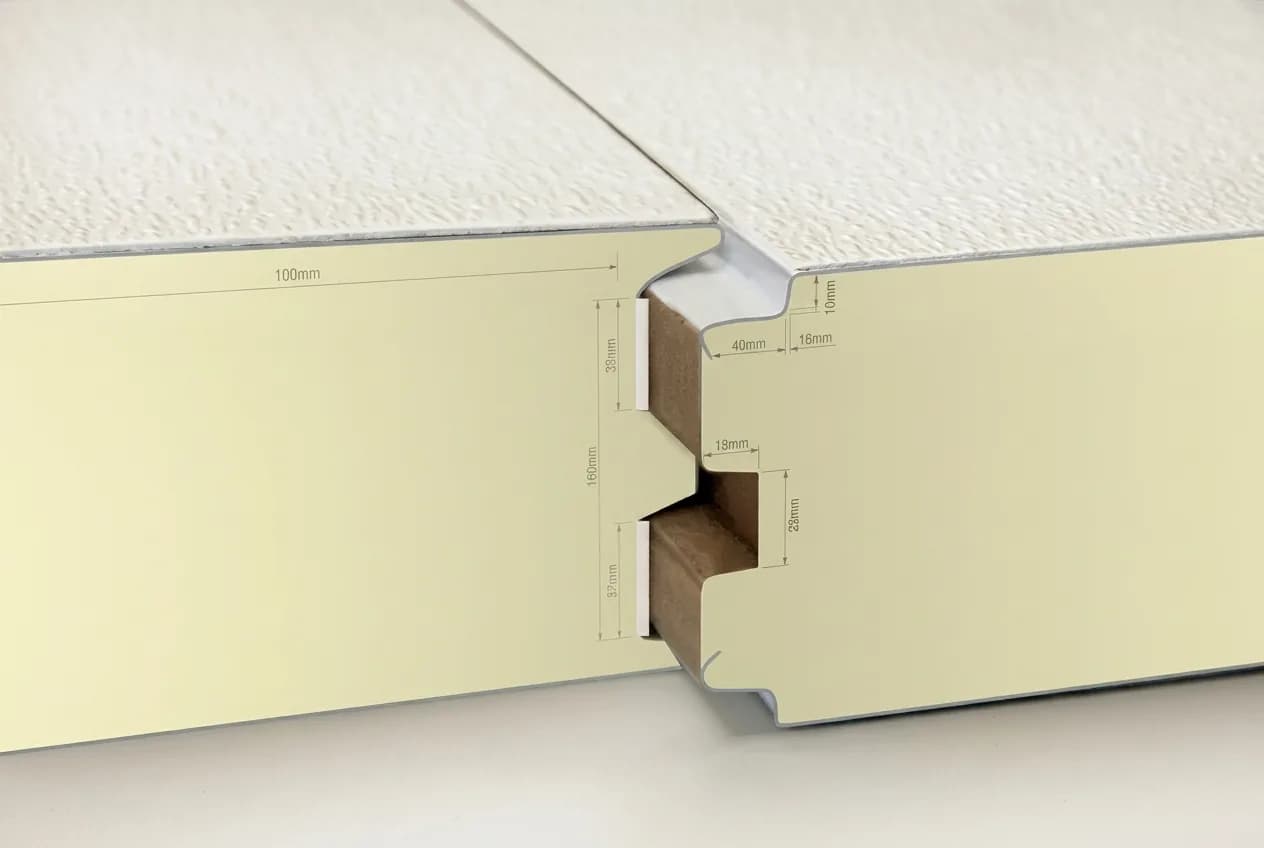
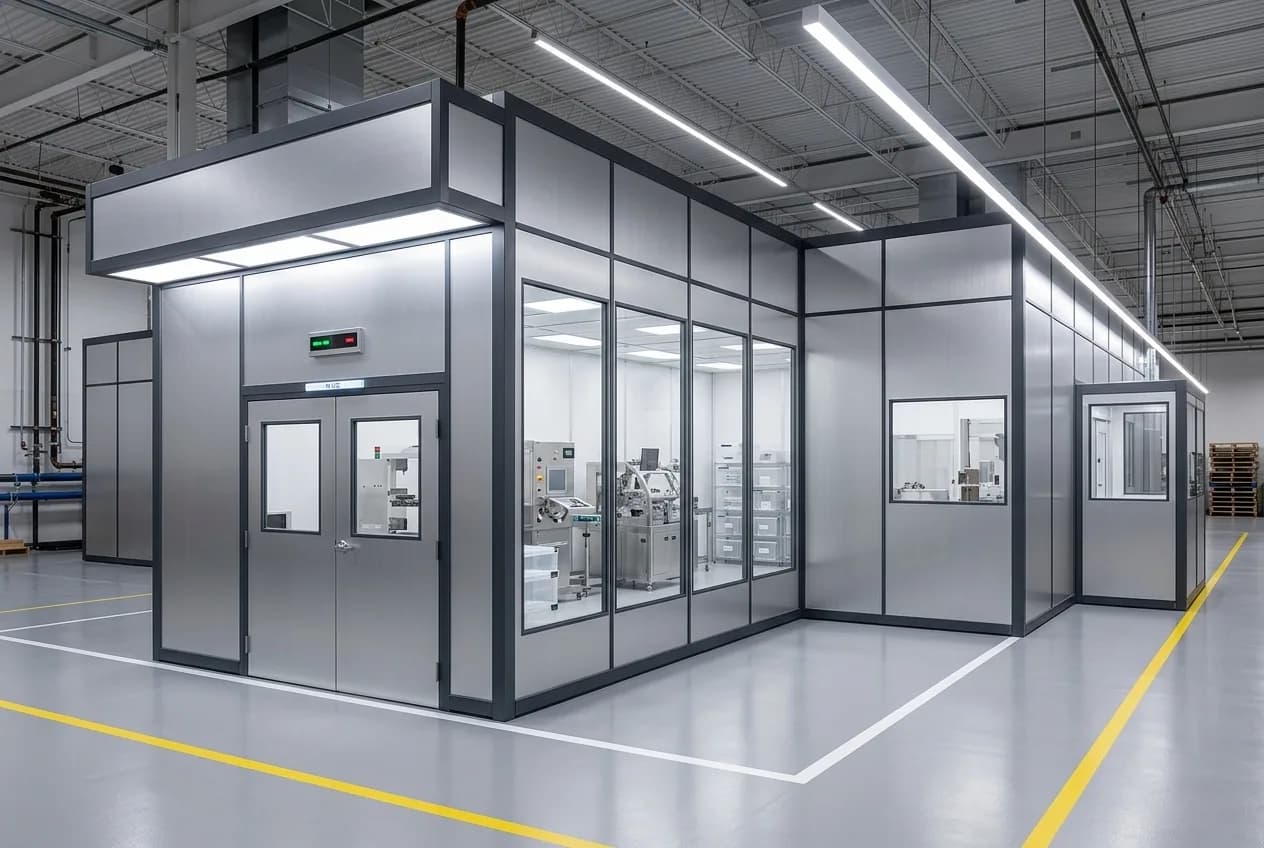
A PUF (polyurethane foam) panel is a factory-made sandwich: two pre-painted galvanized steel (PPGI) sheets bonded to a core of rigid polyurethane foam injected under pressure, so the foam adheres to the steel as one structural unit. The foam's closed-cell structure traps gas in millions of micro-pockets, giving it a thermal conductivity around 0.022 W/m·K — among the lowest of any mainstream insulation, which is why a 50 mm PUF panel outperforms much thicker brick walls at keeping heat out.
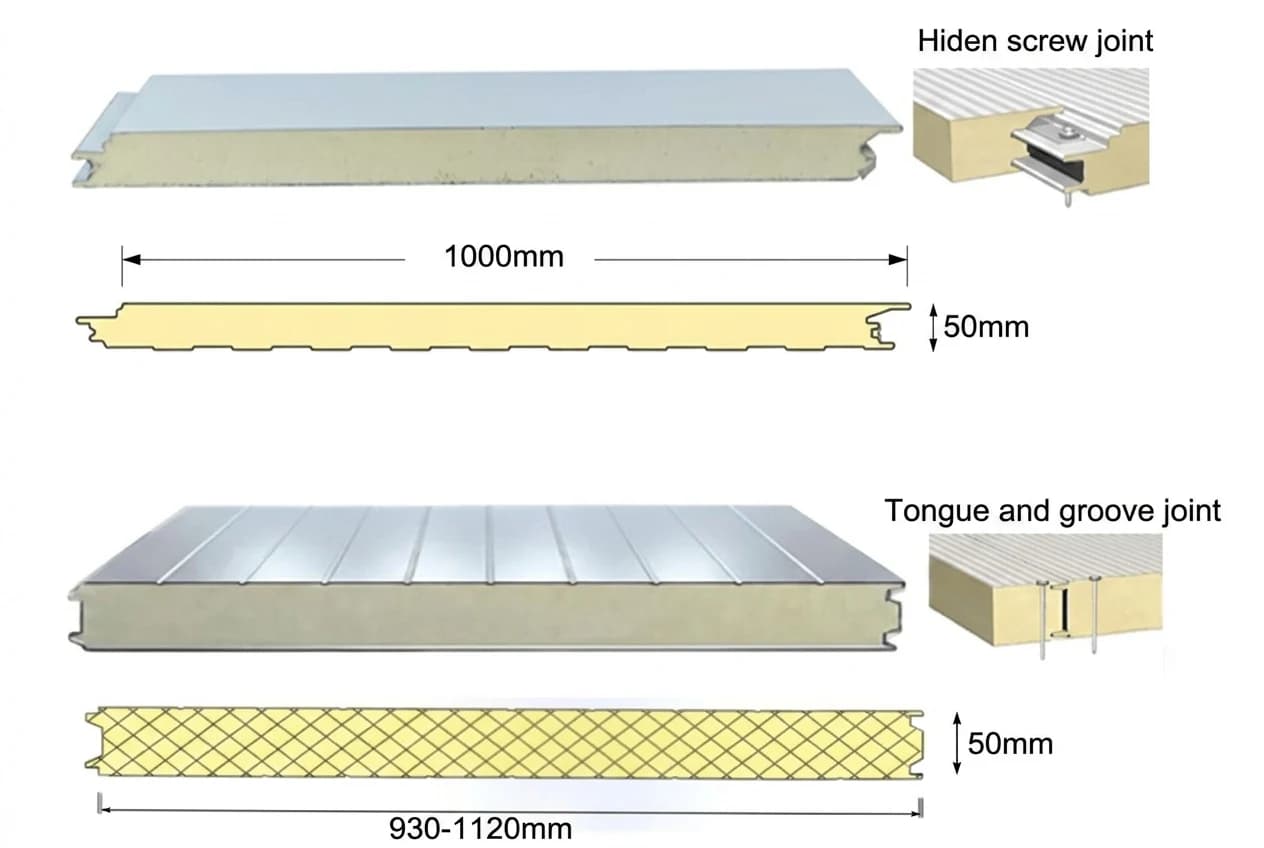
Panels join with tongue-and-groove or cam-lock edges that seal the joint — no thermal gaps, no rattling, and a clean interior line without extra finishing.
Numbers, not adjectives
| Parameter | Specification |
|---|---|
| Core | Rigid polyurethane foam (PUF), density 40 ± 2 kg/m³, CFC-free |
| Thermal conductivity | ~0.022 W/m·K — roughly 30% better insulation than EPS at the same thickness |
| Facing sheets | 0.4 – 0.6 mm PPGI (pre-painted galvanized steel), both faces; SS/aluminium options for hygiene areas |
| Thickness options | 40 / 50 / 60 / 80 / 100 mm — 50 mm standard for cabins; 80 – 100 mm for cold rooms |
| Joints | Tongue-and-groove interlock; cam-lock joints for demountable and cold-room use |
| Fire options | Fire-retardant (FR) grade PUF and PIR panel upgrades for stricter fire requirements |
| Water behaviour | Closed-cell foam absorbs negligible moisture — no sagging or rot in monsoon humidity |
| Panel weight | ~10 – 14 kg/m² at 50 mm — light enough for rooftop and knock-down installations |
Honest comparisons
| Parameter | PUF | EPS (Thermocol) | Rockwool |
|---|---|---|---|
| Insulation (same thickness) | Best (~0.022 W/m·K) | Good (~0.035) | Good (~0.040) |
| Strength & rigidity | High — foam bonds to sheet | Moderate | Moderate |
| Moisture resistance | Excellent — closed cell | Good | Needs sealing |
| Fire performance | FR/PIR grades available | Basic | Best — non-combustible |
| Sound insulation | Good | Fair | Excellent |
| Cost | Premium | Economy | Mid–premium |
Our honest rule of thumb: PUF for thermal comfort and AC economy (most cabins), Rockwool where fire norms demand non-combustible cores (kitchens, some industrial sites), EPS where budget rules and duty is light. We build with all three — and will tell you plainly which your use-case needs.
Still comparing wall systems? Read our guide: MS cabin versus PUF-panel cabin.
Made for this climate
Interiors run several degrees cooler than sheet or EPS cabins at peak afternoon — often the difference between a usable and unusable site office in summer.
Better insulation means smaller AC units running fewer hours — users routinely report electricity savings of 30% or more versus uninsulated cabins.
The steel-foam-steel sandwich is stiff and strong, resisting dents and flexing that plague single-sheet construction.
Closed-cell foam shrugs off monsoon humidity — no soggy insulation, no rot, no smell.
Light panels enable rooftop cabins, knock-down kits, and cheaper transport.
The same panel system scales from a guard cabin to a cold room — one technology, every product.
One panel, every product
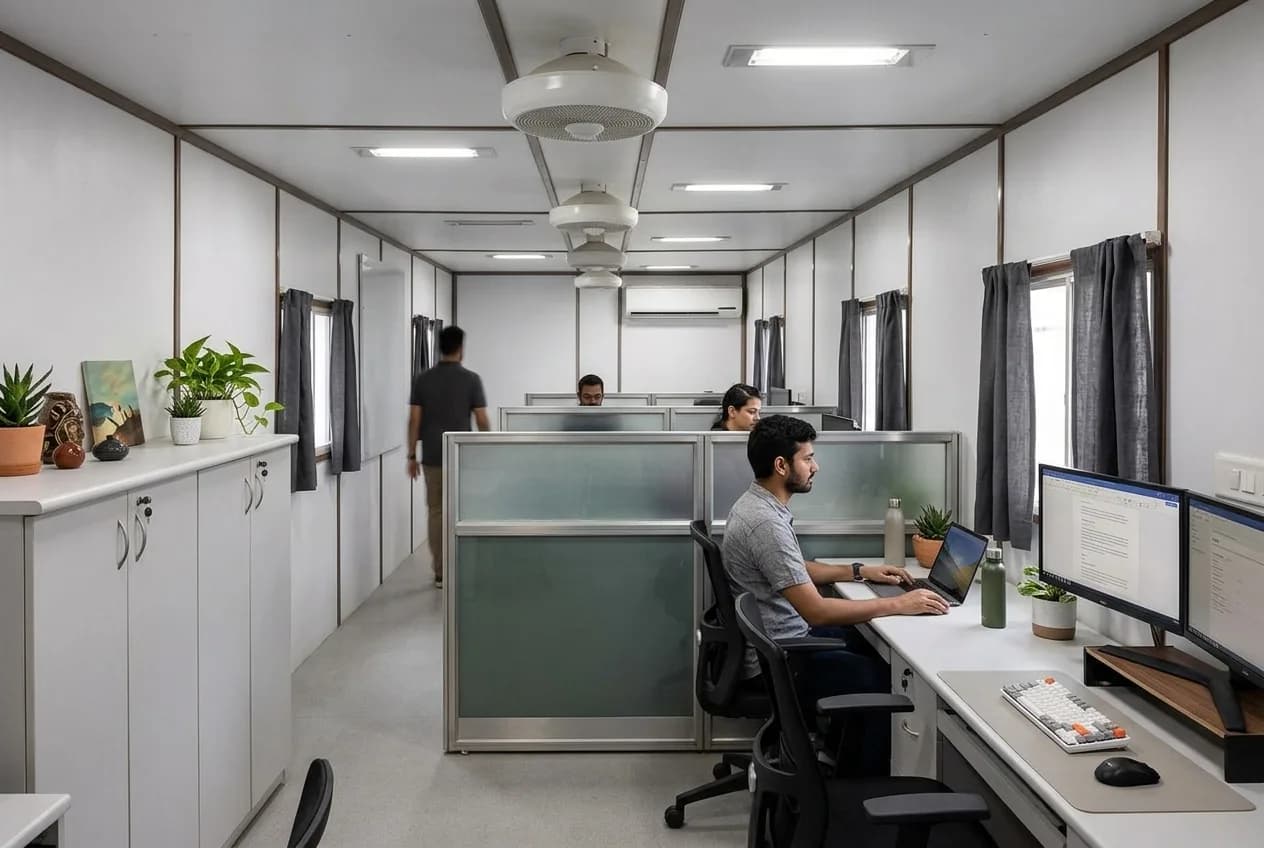
Site offices and engineer cabins that stay workable through summer — the most popular PUF application.
Bunk houses and staff quarters where sleeping comfort decides retention.
Security cabins, toilets, pantries, and shops — every unit in our range, PUF-built on request.
Cold rooms and processing spaces on 80–100 mm panels with cam-lock joints and door systems.
Farmhouses and resort cabins where insulation is the difference between a shed and a home.
Premium that pays back
PUF construction carries a premium over EPS that typically pays back within a couple of summers through AC savings. Indicative pricing:
| Item | Basis | Indicative Price* |
|---|---|---|
| 50 mm PUF wall panel (supply) | Per sq ft of panel | ₹ 150 – 250 |
| 80 – 100 mm PUF panel (cold-room grade) | Per sq ft of panel | ₹ 250 – 400 |
| PUF panel cabin, standard finish | Per sq ft built-up | ₹ 950 – 1,500 |
| 10ft x 10ft PUF office cabin | Per unit | ₹ 1.1 – 1.9 Lakh |
| 20ft x 10ft PUF site office | Per unit | ₹ 2.0 – 3.5 Lakh |
| PUF cold room (basic) | Per unit | ₹ 2.5 – 6 Lakh+ |
*Indicative ex-works sample prices excluding GST and transport; final cost depends on panel thickness, facings, doors/windows, and interiors. Panel-only supply available for builders and fabricators. Contact us for an exact quote.
Simple, transparent process
Pick thickness and facings for your climate and use — we advise from application data, not price lists.
Panels are cut to layout, with openings pre-planned so joints stay sealed around doors and windows.
Panels lock onto the welded steel frame with sealed tongue-and-groove joints.
Electricals run in concealed conduits planned before paneling — no post-hoc chasing that breaks the seal.
Delivered monoblock or as a knock-down kit for rooftop and remote assembly.
Good to know
Answers to the questions we hear most often about PUF panel cabins.
Built-up PUF cabins run roughly ₹950 – 1,500 per sq ft: a 10x10 office around ₹1.1 – 1.9 lakh and a 20x10 site office ₹2 – 3.5 lakh. Panel-only supply runs ₹150 – 250 per sq ft for 50 mm. These figures are indicative sample ranges. Contact Porta Cabin Systems with your size for an exact quote.
PUF is rigid polyurethane foam injected between steel sheets, bonding to them as one unit. Its closed-cell structure insulates about 30% better than EPS at the same thickness, absorbs almost no moisture, and adds structural stiffness — which is why cold storages use PUF, not thermocol.
50 mm is the standard for offices, cabins, and accommodation across most of India. Choose 60 – 80 mm for extreme-heat zones or heavily air-conditioned spaces, and 80 – 100 mm for cold rooms. Thicker is better insulation, but 50 mm already outperforms a brick wall.
Standard PUF is combustible, like most foam insulations — so we offer fire-retardant (FR) grade PUF and PIR upgrades, and recommend Rockwool cores where norms demand non-combustible construction (kitchens, certain industrial sites). We'll specify honestly for your use-case.
Users typically measure interiors 6 – 10°C cooler than a bare metal cabin at peak afternoon, and AC units cycle far less. The exact gain depends on orientation, colour, and ventilation — we plan all three during design.
No. The closed-cell foam absorbs negligible water, and the steel facings seal it completely. Unlike glass wool that slumps when damp, PUF keeps its insulation value for decades.
Yes — we supply cut-to-size PUF wall and roof panels to builders, fabricators, and cold-room installers, with tongue-and-groove or cam-lock edges and matching flashings.
Almost none: wash the exterior, check sealants annually, and repaint the PPGI when the finish dulls (typically 7–10 years). The panel core itself needs nothing for the cabin's long service life.
Need insulated construction at building scale? See our prefabricated buildings.
Tell us your cabin size and where it will stand — get a thickness recommendation and fixed quote within hours. PUF panel cabins and panel supply from Porta Cabin Systems, delivered across India.
In this range
Every model below is built to order. Sizes and layouts can be customised — final specifications are as per the approved quotation.
PUF Panel Cabins
20 × 8 × 8.5 ft
₹3,12,700 grand total
incl. GST
Request a quotation through your cart. No online payment or stock reservation.