
Shipping Container Offices in Harohalli
PRIMARY PRODUCT IN HAROHALLI
Shipping Container Office
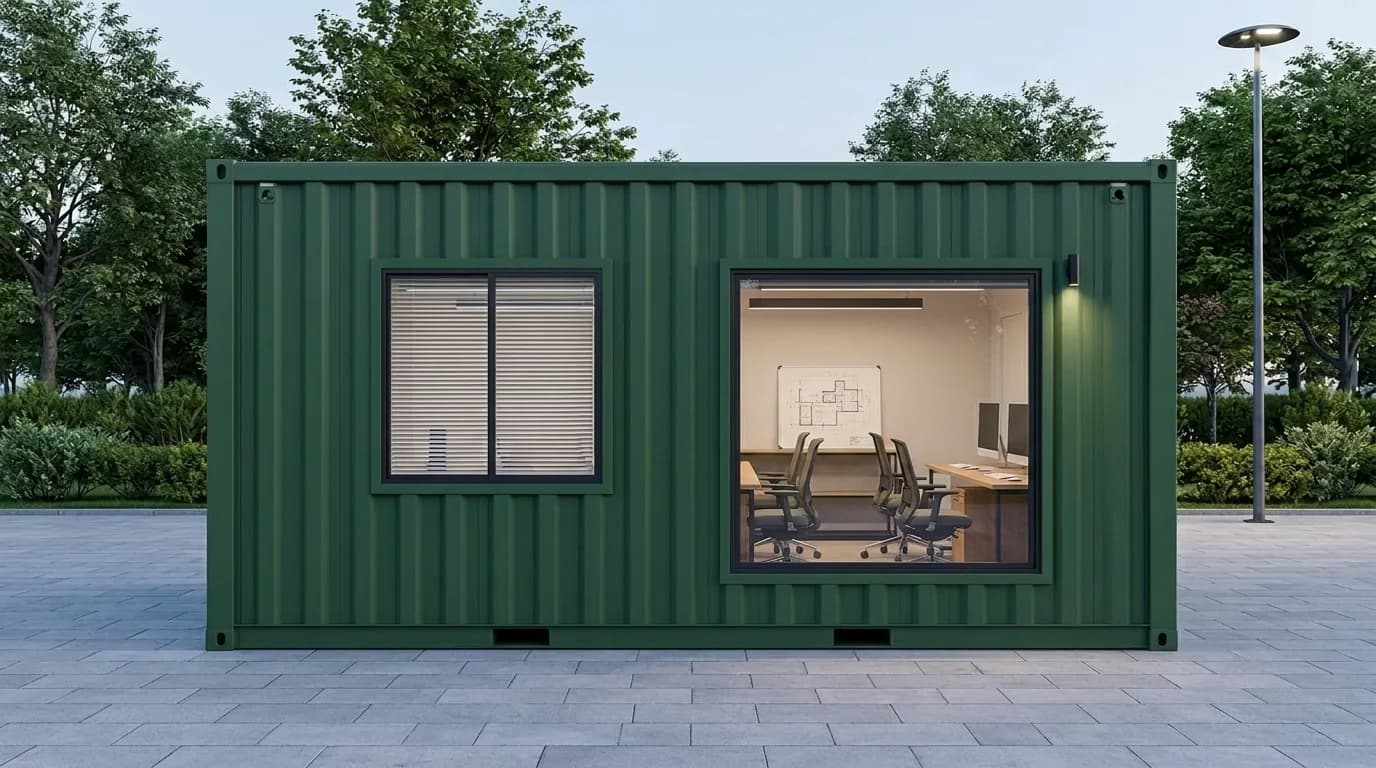
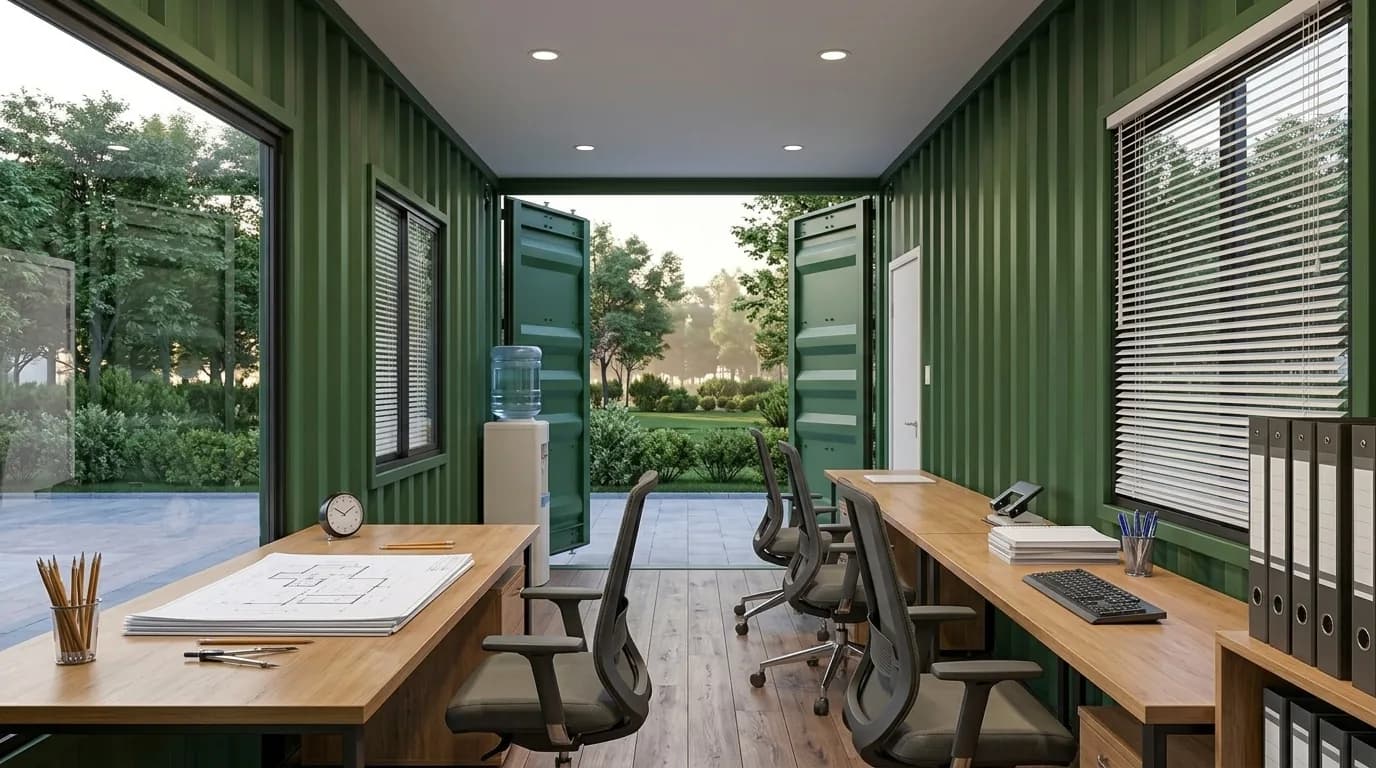
On land that has been allotted and not yet built on, three things are missing at once, and a container covers all three the day it lands. **Somewhere to work from.** Your engineer, your contractor and your consultant need a table, a plug point and a roof rather than the bonnet of a car. Drawings need somewhere to be spread out and left. Meetings happen on the plot instead of back in the city. **Somewhere to lock.** From the day work starts the plot holds cement, steel, tools, fittings and instruments, on land with no compound wall. A converted container is a steel box with a welded frame and either a steel personnel door or the original container doors retained. What that is worth against any particular risk is your judgement to make, not a claim for us to sell you. **A presence on the land.** An empty plot with your name painted on a unit standing in the middle of it reads differently from an empty plot. That is worth something before the wall goes up. The order that tends to work is container first, then the compound wall, then everything else — because the container is what holds the material the wall is built from.
AVAILABILITY
Available for sale and on rent
Available sizes
- Converted from standard shipping container shells, single, joined or stacked, with the internal arrangement built to the phase you are in.
Specifications
- Container type and condition, insulation and lining, flooring finish, openings, doors and electrical scope are finalised against the approved quotation and drawing.
View Shipping Container Offices
Final specifications, sizes and pricing are as per the approved quotation. See the full product page for the complete specification.
What an Empty Plot Needs Before Anything Else
On land that has been allotted and not yet built on, three things are missing at once, and a container covers all three the day it lands. **Somewhere to work from.** Your engineer, your contractor and your consultant need a table, a plug point and a roof rather than the bonnet of a car. Drawings need somewhere to be spread out and left. Meetings happen on the plot instead of back in the city. **Somewhere to lock.** From the day work starts the plot holds cement, steel, tools, fittings and instruments, on land with no compound wall. A converted container is a steel box with a welded frame and either a steel personnel door or the original container doors retained. What that is worth against any particular risk is your judgement to make, not a claim for us to sell you. **A presence on the land.** An empty plot with your name painted on a unit standing in the middle of it reads differently from an empty plot. That is worth something before the wall goes up. The order that tends to work is container first, then the compound wall, then everything else — because the container is what holds the material the wall is built from.
The Difference Between a Room and a Steel Box
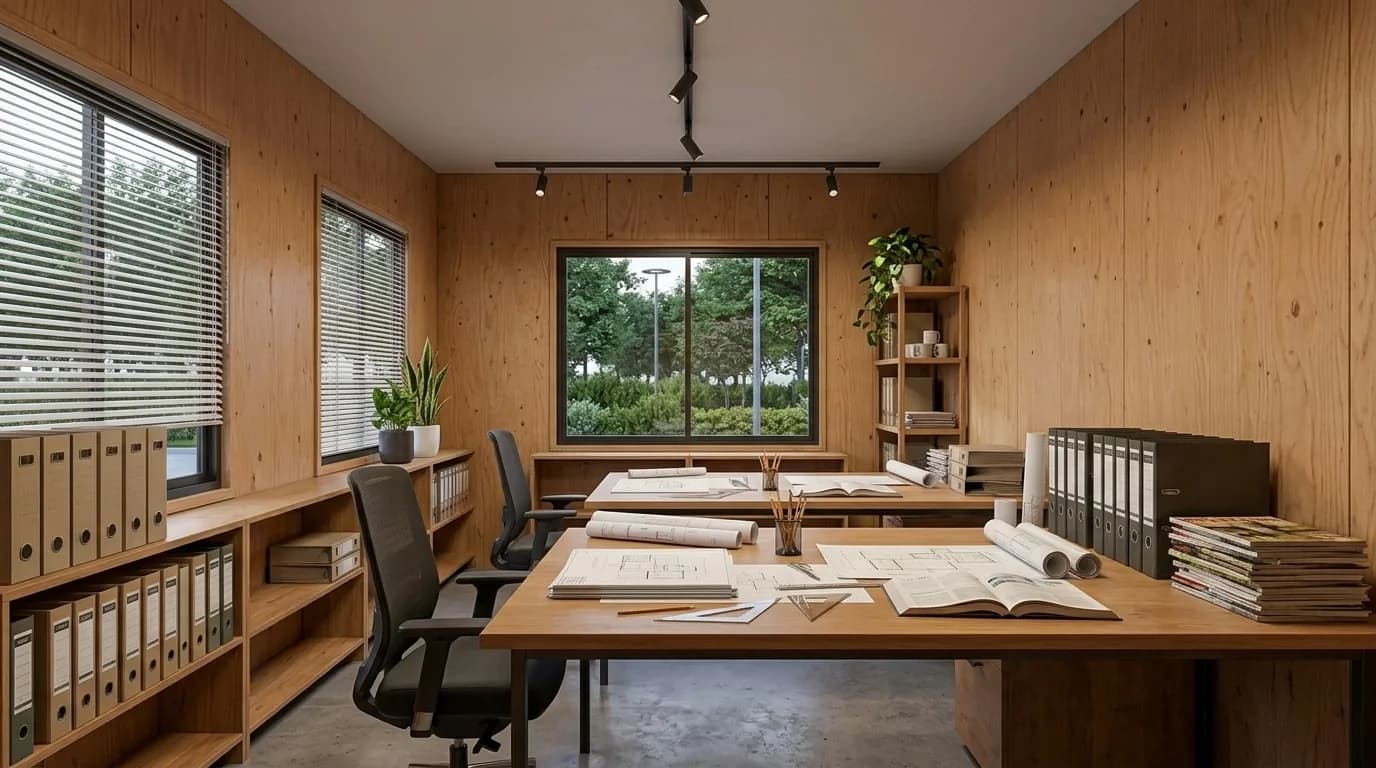
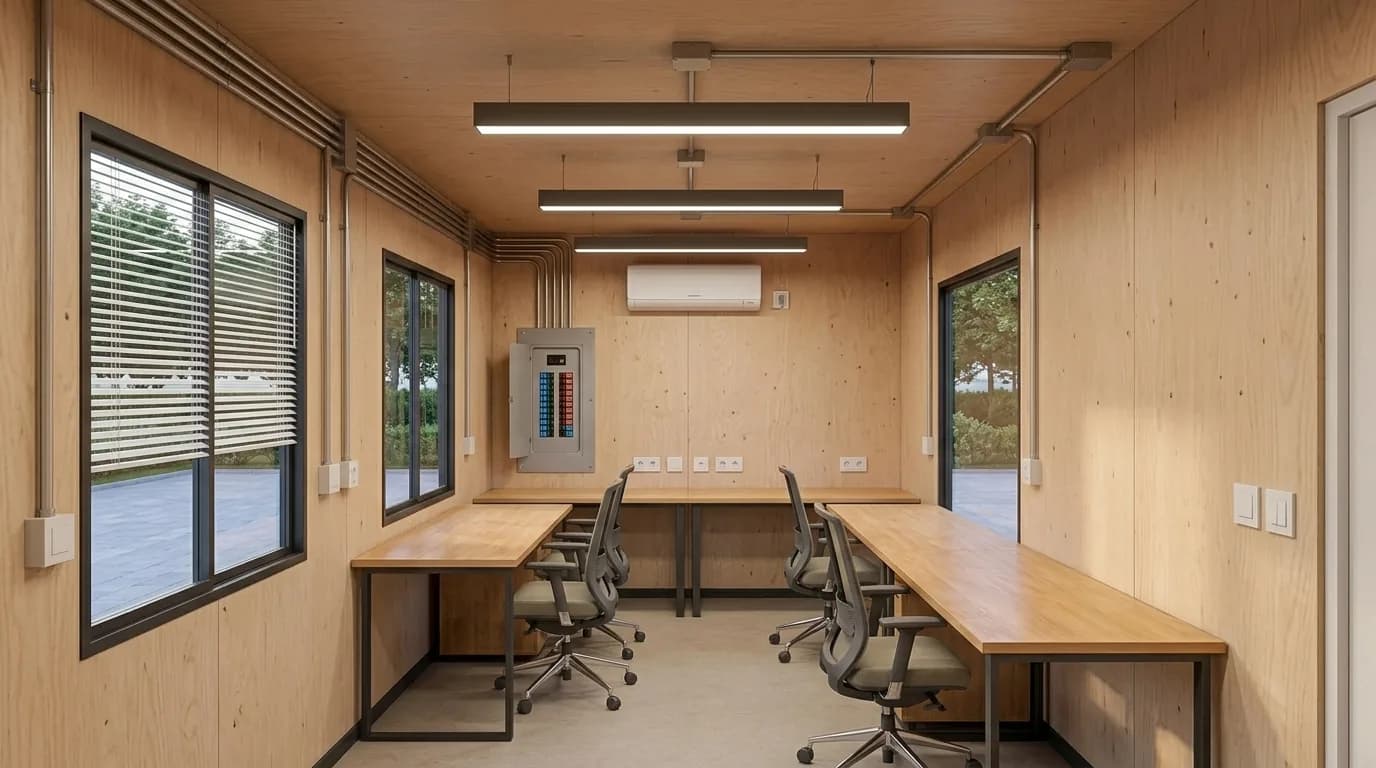
The conversion is not the interesting part; the line item is. A shipping container becomes a room when it is insulated and lined internally, the floor is overlaid and finished, openings are cut and framed, and the wiring runs in concealed conduits. Without the lining it is a steel box with a light in it, and by the middle of the afternoon nobody will sit in it. Both are sold under the same words. When you compare quotations, the line to find is the insulation and the lining — what it is and where it goes. If a quotation does not mention it, that is itself the answer. Everything else follows from the shell. The container was engineered to be lifted and stacked, which is why it comes off a trailer by hydra and sits where you point without a foundation on firm, level ground.
The Unit Outlives the Construction Period
People buy one thinking about the build. It is worth deciding at the start what happens afterwards, because the same unit can go on doing work once the plant exists. **Before construction** it is the site office — drawings, meetings, the first records — and a lockable base on land that has nothing else on it. **During construction** it is that plus a store for tools, fittings and instruments. **At commissioning** it can move to the gate as a security and visitor point, or to the weighbridge, while the permanent block is being fitted out. **Once you are running** it can be a gate office, a weighbridge office, a driver documentation point, a sample or records room, a store, or a contractor cabin for the next expansion. If you expect that arc, say so at the start. A better fit-out and a paint scheme you will still be content with in year four cost very little at the point of ordering and a good deal more once the unit is standing.
One Room, or a Room and a Store
A single unit as one room is the common first purchase, and for a site engineer it is usually right. Beyond that the arrangement follows the phase. A longer shell partitioned into a work area, a cabin and a meeting corner. An office at one end with a hardened store at the other, which is the usual choice while construction is running. A self-contained unit with its own washroom, which on a plot with no facilities at all is not a luxury. No fit-out at all, where what you need is only the lockable box. Two units side by side and connected internally, or two stacked, as the site grows. Tell us which phase you are in and who will use it, and the arrangement follows from that rather than from a list.
Choosing a Shell for the Phase You Are In
Container shells come in fixed lengths, which is the honest trade-off against a panel cabin built to any size you like. What is open is everything inside — where the partitions land, where the door and windows are cut, and the whole fit-out. So the question is not what size you would like. It is how many people will use it, whether it has to hold material as well, and whether you expect it to keep working once the plant is running. Tell us those three and we will tell you which shell fits.
Where the Unit May Stand Is Not Our Decision
On a site handling pharmaceutical or chemical process and storage, where a container office stands is a safety decision rather than a convenience one. Separation from process and storage areas, emergency egress routes, assembly points, access for emergency vehicles, and whether the intended position falls within any classified area are all determined by your safety officer, your consultant, and the conditions attached to your approvals. Not by a supplier, and not by what looks sensible on a site plan. **Being straight about a limit.** A standard office container is an insulated steel room with ordinary electrical fittings. It is not equipment rated for a classified hazardous area. If the position you have in mind is classified, that is a different and more specialised conversation, and you should have it with your safety consultant before you talk to any container supplier. We would rather tell you that now than after you have paid for something you cannot place. What we can do is give you the unit's dimensions, weight, electrical details and construction specification, in writing, for your safety officer to assess. Then we build and place it where they say.
Getting a Trailer Onto Unmade Ground
This is where an undeveloped plot differs from a working site, and it is worth settling before the vehicle is booked rather than on the morning. **Is there a made-up approach?** Estate roads are one thing; the last stretch onto your own land is often another. **How firm is the ground?** A loaded trailer and a hydra are both heavy, and on loose or freshly levelled soil — especially after rain — they sink. Sometimes the answer is a temporary murram path. Sometimes it is waiting for three dry days. **Where exactly will it sit?** Level, compacted and thought about, rather than the nearest flat-looking spot. Moving it later is straightforward but not free. **Where does the water go?** On an unlevelled plot water finds the low point. Placing the unit a little higher, or on pads, keeps the floor dry through the season. **Can the hydra reach and swing?** Open plots are usually generous about this, but confirm it beforehand rather than on the day. Send us a couple of photographs of the plot and the approach and we can usually tell you whether this is a straightforward delivery or one that needs the ground prepared first.
Reaching Plots Around Harohalli
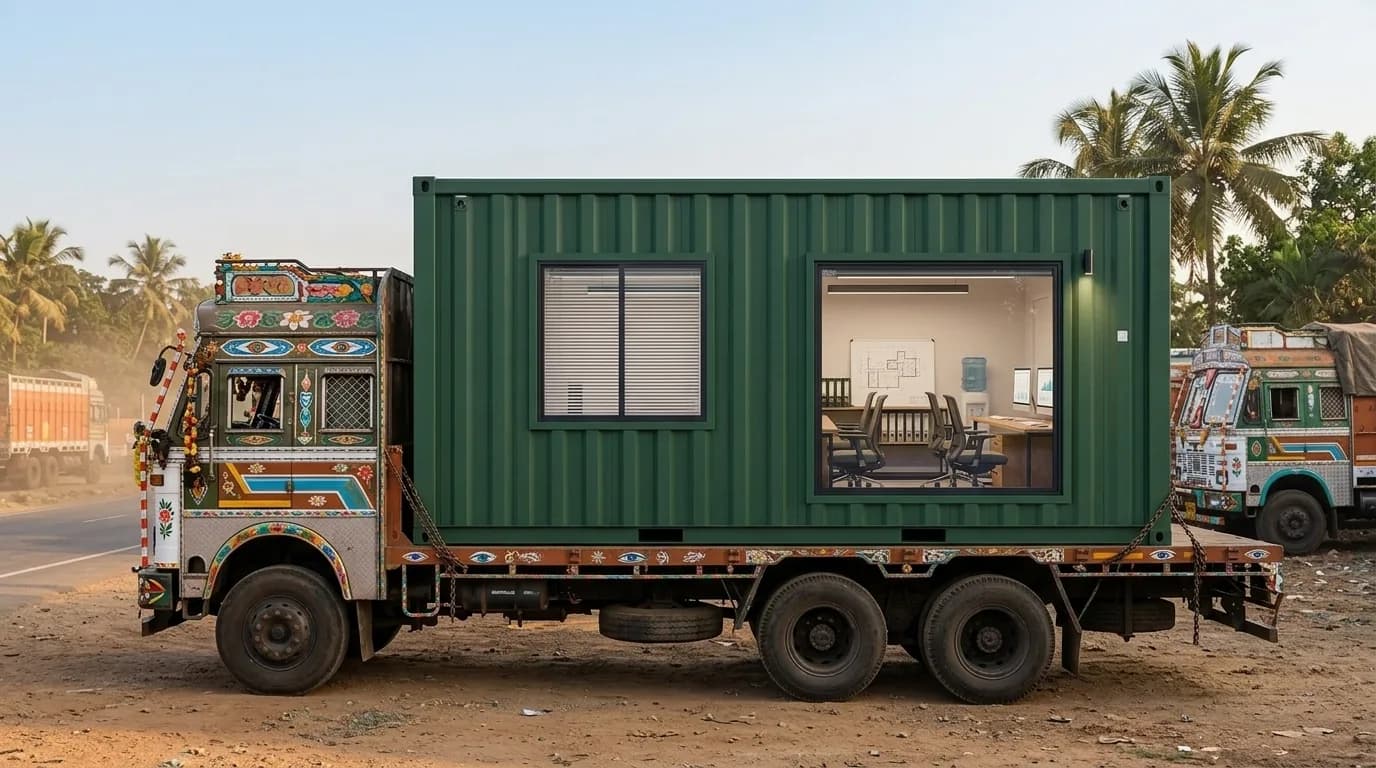
We supply container offices across Harohalli and the surrounding industrial belt, and deliver across the Bangalore region, Karnataka and other states. If you are not sure whether your plot is covered, ask — it almost certainly is.
Delivery charges
| Delivery to | Charge incl. GST |
|---|---|
| Up to and including 50 km by road from our yard | ₹1,000 |
| Beyond 50 km, in Karnataka and Tamil Nadu | ₹18,000 |
| Andhra Pradesh, Telangana, Kerala and Puducherry | ₹28,000 |
| Elsewhere in India that we serve | ₹45,000 |
Charged at checkout when you buy online. Rates include GST and cover transport with standard loading at our factory. Unloading, positioning and installation at your site are optional, at ₹15,000 including GST, added only if you choose them.
In Karnataka and Tamil Nadu, the first two rates depend on the road distance to your exact address. It is not measured at checkout at present, so delivery to an address in Harohalli is confirmed in a quotation.
Delivery is confirmed in a quotation instead when a PIN code cannot be verified, and for Lakshadweep and the Andaman and Nicobar Islands. On an order placed through a quotation, transportation is arranged and quoted based on the delivery location and site access. Full terms: Shipping & Delivery Policy.