
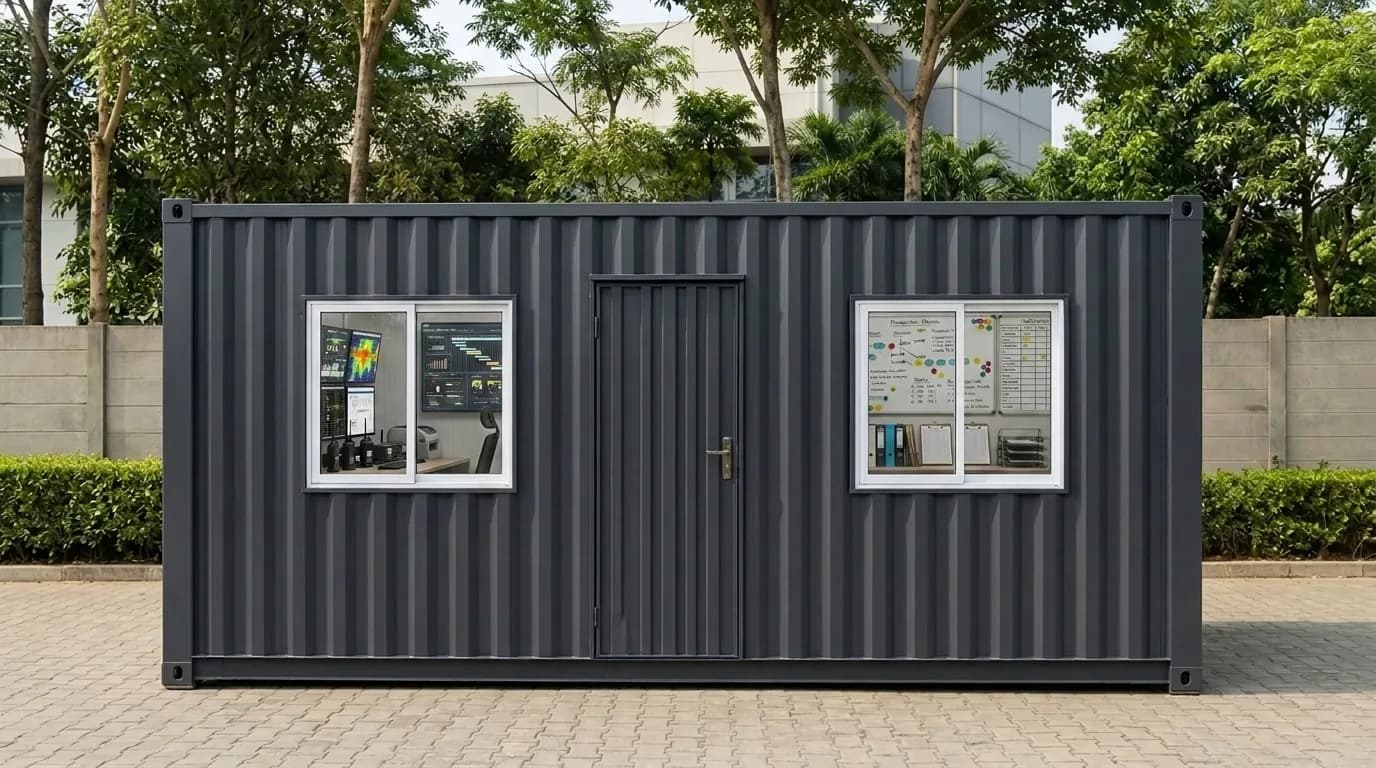
Office Container Manufacturers in Bidadi
PRIMARY PRODUCT IN BIDADI
Office Container
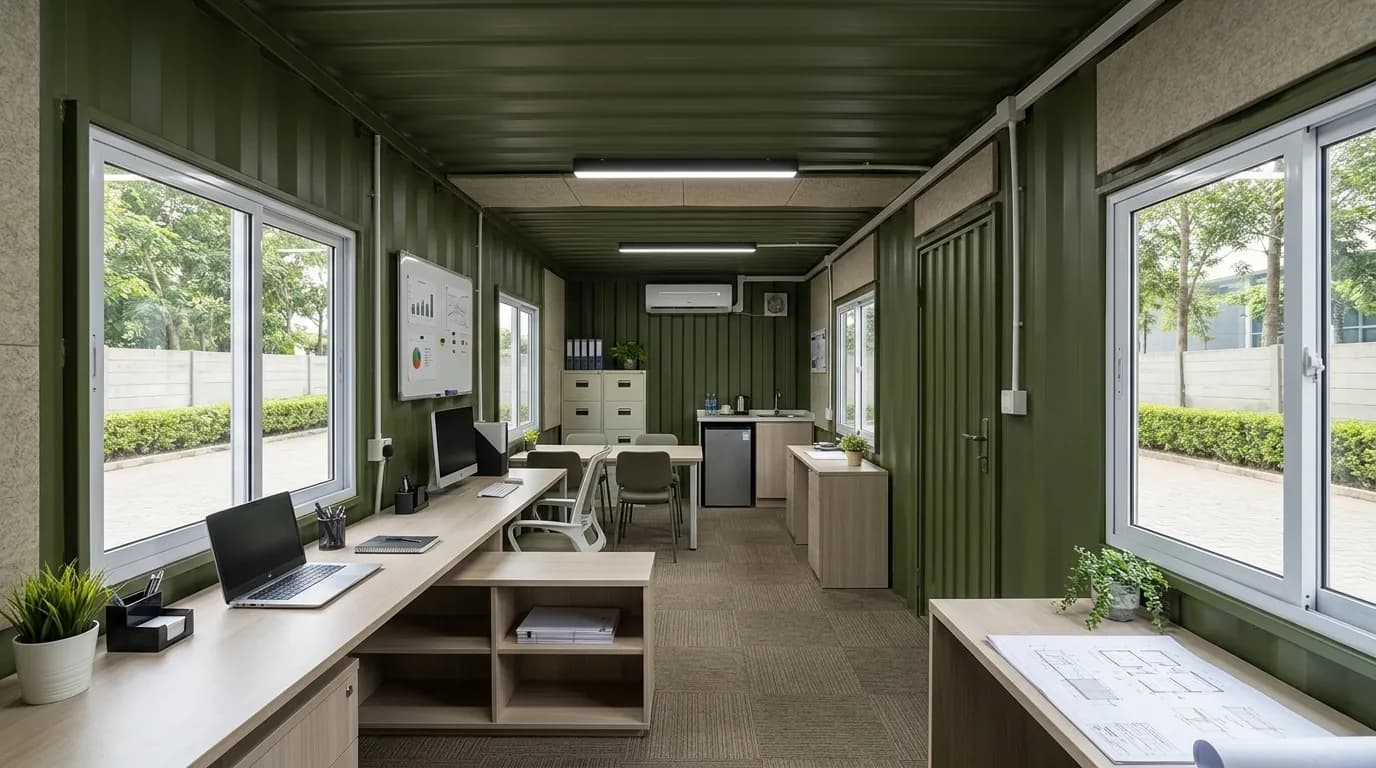
A container office is designed to stand on its own base rather than to become part of the building around it. For a unit on a lease, that changes several things at once. **It is a discrete unit, not an extension.** A masonry office built inside a rented shed becomes part of that shed. A container is a self-contained room that sits on the floor or the yard. What connects it to the premises — power, and anything physically fixed for stability or services — is limited, identified in advance, and agreed with whoever owns the site. **It is planned around the end of the term.** The point of a container office on leased premises is that removal is considered at the start rather than discovered at the end. What that requires in practice is set out below, and it is worth reading before you order rather than after. **It is finished before it arrives.** There is no extended building programme inside somebody else's premises, and no dispute about who repairs what afterwards. **It takes a working environment.** Steel walls handle the knocks that come with forklifts, reversing vehicles and material movement in a way lighter panel construction does not.
AVAILABILITY
Available for sale and on rent
Available sizes
- Converted from standard shipping container shells, single or joined, with the internal arrangement built to your use.
Specifications
- Container type and condition, insulation and lining, flooring finish, glazing, doors and electrical scope are finalised against the approved quotation and drawing.
View Shipping Container Offices
Final specifications, sizes and pricing are as per the approved quotation. See the full product page for the complete specification.
Working From Premises You Do Not Own
A container office is designed to stand on its own base rather than to become part of the building around it. For a unit on a lease, that changes several things at once. **It is a discrete unit, not an extension.** A masonry office built inside a rented shed becomes part of that shed. A container is a self-contained room that sits on the floor or the yard. What connects it to the premises — power, and anything physically fixed for stability or services — is limited, identified in advance, and agreed with whoever owns the site. **It is planned around the end of the term.** The point of a container office on leased premises is that removal is considered at the start rather than discovered at the end. What that requires in practice is set out below, and it is worth reading before you order rather than after. **It is finished before it arrives.** There is no extended building programme inside somebody else's premises, and no dispute about who repairs what afterwards. **It takes a working environment.** Steel walls handle the knocks that come with forklifts, reversing vehicles and material movement in a way lighter panel construction does not.
How a Shipping Container Becomes an Office
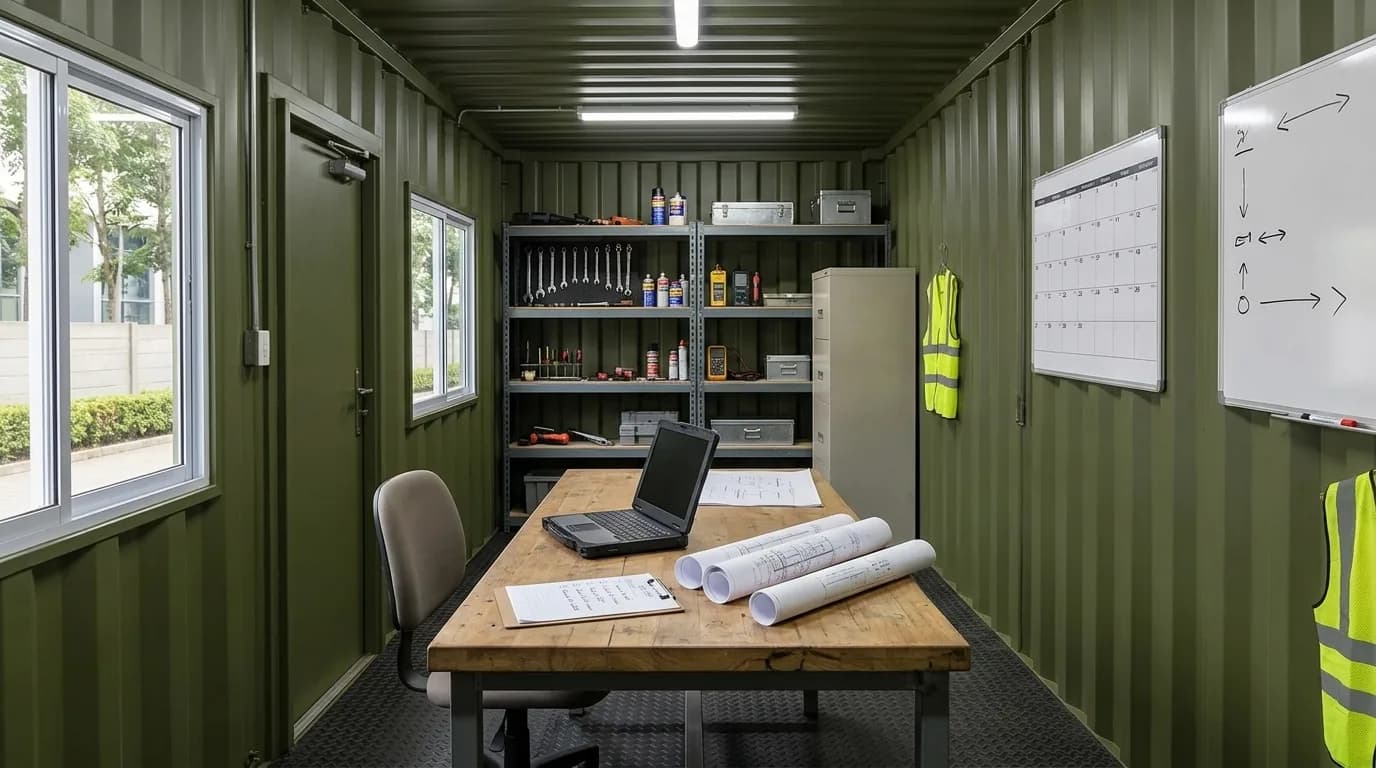
We start with a shipping container and convert it. Openings are cut and framed for windows and a door. Insulation lining goes onto the walls and ceiling, then an internal finish over it. The floor is overlaid and finished. Wiring runs in concealed conduits to lights, fans and sockets. The shell is treated and painted inside and out. What arrives is a finished room. The container's own corner castings are what let it be lifted by hydra or crane and set down on prepared ground. The distinction worth holding on to is between a converted office and a painted shell. Insulation and internal lining are what separate a room somebody can work in from a steel box with a light in it, and both are sold under the same name.
Planning for the Workspace to Be Removable
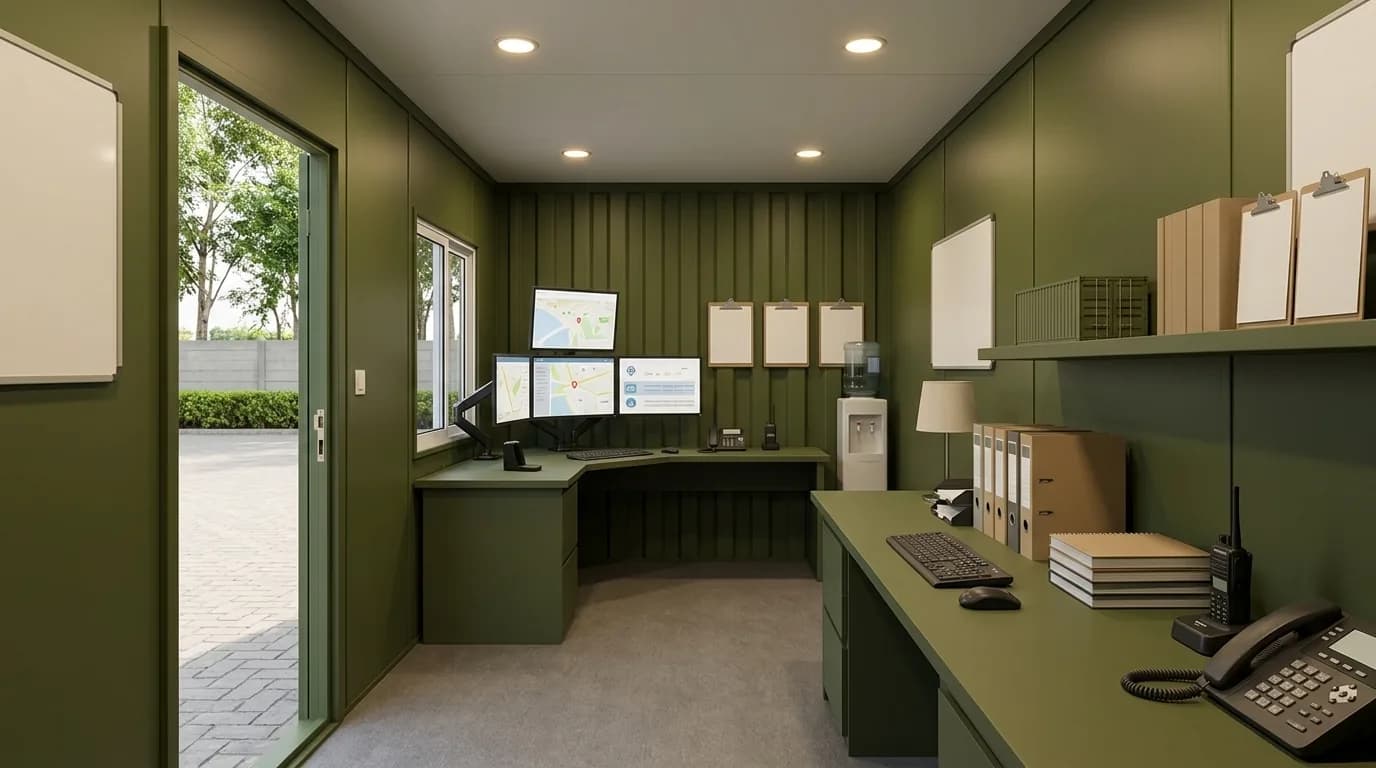
An office container can be planned as a removable, freestanding workspace. Whether it can later be lifted and relocated depends on site access, foundations, utility disconnection, approvals, structural condition and suitable lifting and transport equipment. That sentence is the whole of what we will claim, and it is worth taking seriously in both directions. Designing for removal is a real advantage. Treating removal as guaranteed is how people end up surprised. So the things that decide it are worth settling early: whether a trailer and a lifting machine can still reach the position in three years' time, what the container is standing on and whether that stays behind, how the supply is connected and where it is metered, and what the site owner expects to find when you leave. Yards fill up. An access route that was open when the container went in is not automatically open when it comes out.
What to Settle With the Site Owner First
None of this is complicated, and all of it is easier before the container arrives than after. These are points to check — we are describing what to ask, not telling you what your position is. **Written confirmation.** A verbal understanding holds until somebody changes their mind or moves on. A short written record of what has been agreed about placing and later removing the unit costs nothing to obtain. **What your agreement says.** Terms vary, and some deal with additions to the premises specifically. Read yours, or have whoever advises you read it. We are not the right people to interpret it. **Groundwork, and who pays.** A single container usually needs firm, level ground. If footing pads or a plinth are required, agree upfront who provides them and whether they stay behind. **Power and metering.** How the unit connects to supply and whose meter it sits behind. Settle it before delivery, not on the day the electrician arrives. **Access at the end.** Confirm that a trailer and lifting machine can reach the position when the time comes, and what condition the site owner expects the ground to be left in. **Estate or campus requirements.** Some industrial estates and larger campuses have their own rules. Check with the estate authority rather than assuming. One practical point on renting: if you are taking a container on rent for premises you lease, consider matching the rental term to your own term rather than to a round number. It is easy to overlook and awkward to unwind.
Where a Container Office Earns Its Place
**Offices for units in leased sheds.** Somewhere for whoever runs the place, the paperwork and the records, placed in the shed or the yard beside it. **Yard and stockyard offices.** Where the work happens outdoors and the office belongs beside it rather than in a building at the other end of the site. **Vehicle and transport yards.** An office that sits among moving traffic all day and has to take it. **Gate, security and weighbridge posts.** Outdoors permanently, often unattended overnight. Steel construction earns its keep here. **Contractor accommodation during works.** When a unit is adding a line or a shed, the contractor needs an office and a lockable store for the period. **Secured stores.** No office fit-out at all — a hardened, lockable box for tooling, spares and consumables.
Ways the Shell Gets Divided Up
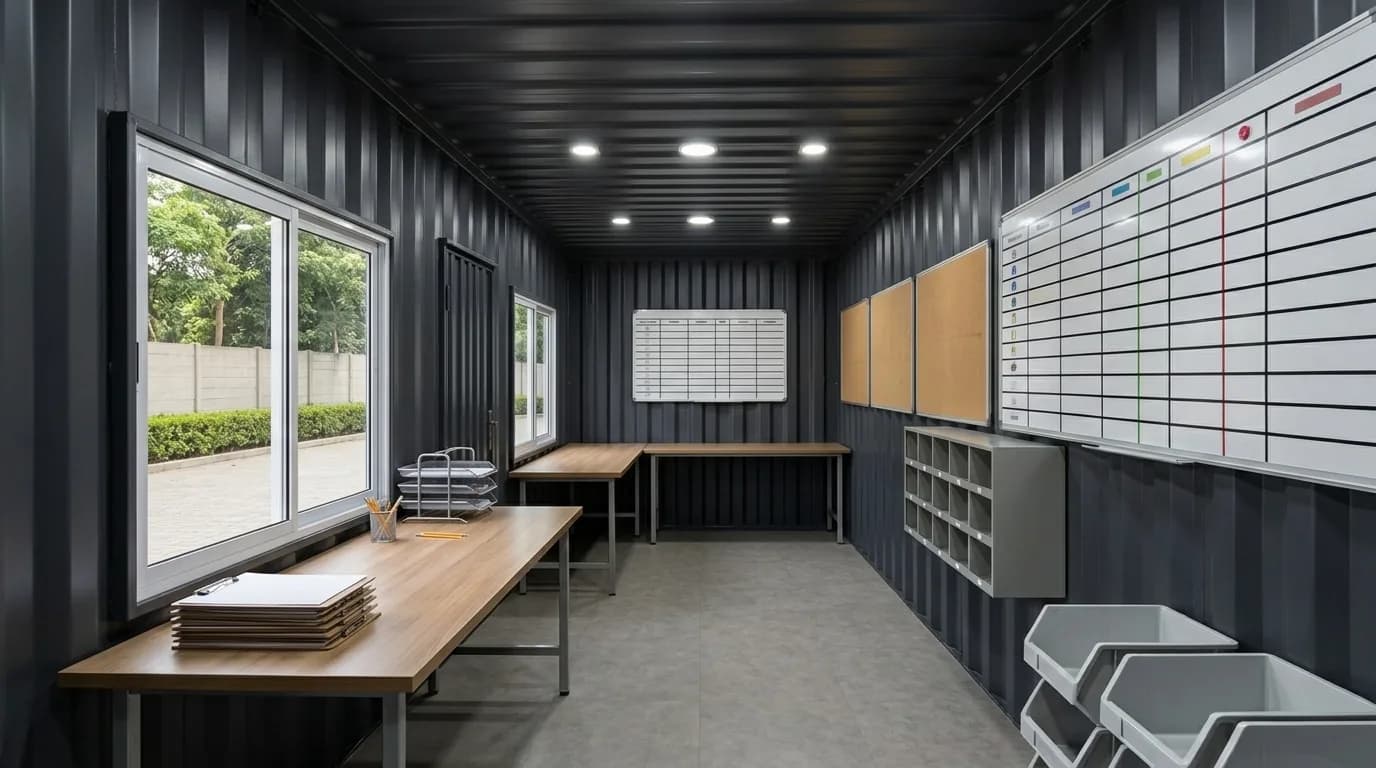
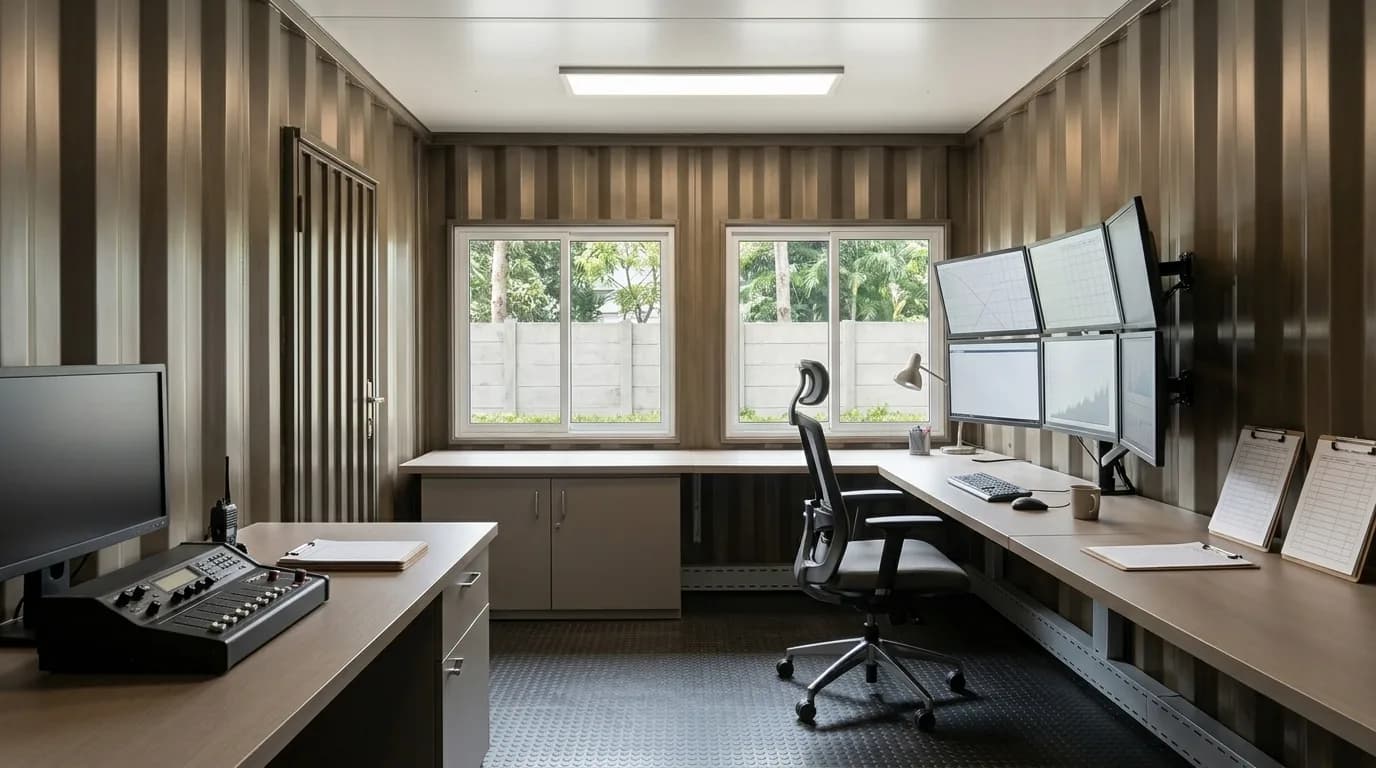
A single container makes a single office room, and for most first purchases that is the right answer. Beyond that the arrangement follows the use. A longer shell partitioned into a work area, a closed cabin and a meeting corner. An office at one end with a locked store at the other. A self-contained unit with its own washroom, which earns its space where the shared facilities are far off. Two units side by side and connected internally. Two stacked, where the ground area matters more than the floor area — which needs prepared, load-bearing ground and, on leased premises, agreement about that groundwork first. The shell dimensions are what they are; that is the trade-off against a panel cabin built to any size you like. Everything inside is open: where the partitions land, where the door and windows go, and the whole fit-out.
Trailer, Hydra and the Last Two Hundred Metres
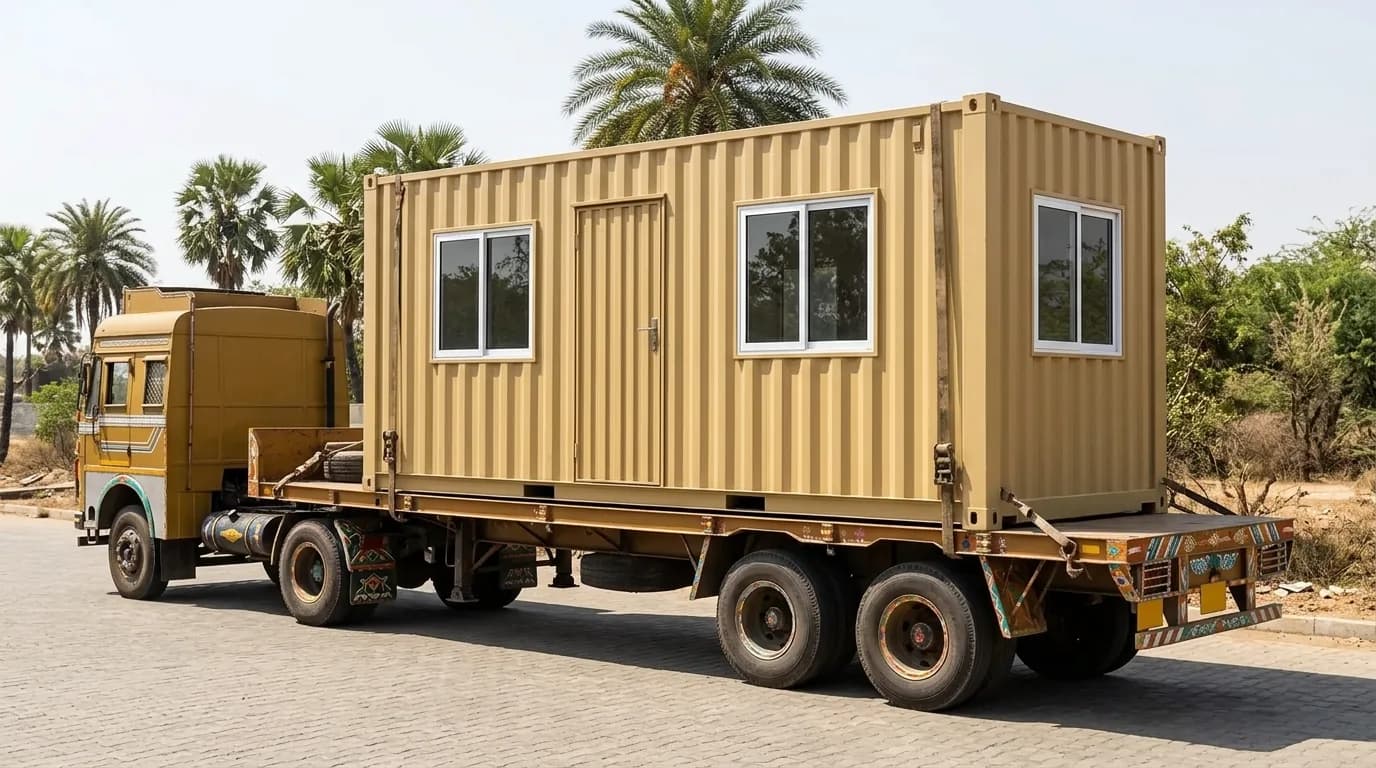
A container arrives on a trailer and needs a hydra or crane to come off, so the last part of the journey is the part worth planning. Before dispatch we confirm the approach and whether a long vehicle can make the turn, gate width and turning space inside the premises, the height of anything crossing the entrance, where the lifting machine can stand and swing clear of the shed and the compound wall, and whether the ground where it will sit is firm and level. If you are inside a larger campus or a customer-linked facility, entry passes, material gate passes and a safety induction may be needed in advance. Tell us early and our crew will work to your process rather than turning up expecting to be waved through.
Supplying the Bidadi Area
We supply office containers across Bidadi and the surrounding industrial belt, and deliver across the Bangalore region, Karnataka and other states. If you are not sure whether your address is covered, ask — it almost certainly is.
Delivery charges
| Delivery to | Charge incl. GST |
|---|---|
| Up to and including 50 km by road from our yard | ₹1,000 |
| Beyond 50 km, in Karnataka and Tamil Nadu | ₹18,000 |
| Andhra Pradesh, Telangana, Kerala and Puducherry | ₹28,000 |
| Elsewhere in India that we serve | ₹45,000 |
Charged at checkout when you buy online. Rates include GST and cover transport with standard loading at our factory. Unloading, positioning and installation at your site are optional, at ₹15,000 including GST, added only if you choose them.
In Karnataka and Tamil Nadu, the first two rates depend on the road distance to your exact address. It is not measured at checkout at present, so delivery to an address in Bidadi is confirmed in a quotation.
Delivery is confirmed in a quotation instead when a PIN code cannot be verified, and for Lakshadweep and the Andaman and Nicobar Islands. On an order placed through a quotation, transportation is arranged and quoted based on the delivery location and site access. Full terms: Shipping & Delivery Policy.